



What is Signal Processing?
Signal processing can simply be defined as manipulation of signals with a given purpose, which could be improving the quality of such signals, extracting information from them, or changing them into a more useful format.
Signals could be anything ranging from sound to images, videos, and just plain data. It is within signal processing techniques that signals are analyzed, modified, and synthesized.
Why is Signal Processing Important?
Signal processing is very important because it enhances the performance of the communication system, guarantees correct interpretation of data, and also enables data to be stored and transmitted effectively. It finds applications from telecommunication through medical images.
Types of Signals
There are basically two broad classes of signals:
Analog Signals: Continuous signals that vary smoothly with time.
Digital Signals: Discrete signals that take only a few values.
Example: A human voice is an analog signal while the data on a CD is a digital signal.
Basic Signal Processing Concepts
As we’ll look at specific techniques in the sections below, here are some of the basic concepts to get us started:
Sampling: Analog to Digital Signal Conversion is realized by sampling the amplitude at equal time intervals. For this, conversion is done at regular time intervals such that the analog signal becomes a continuous and well-defined process. In this process, however, a huge number of amplitudes are collected and stored. It is a more complicated procedure.
Quantization: Is an approximation of continuous values to a set of discrete levels.
Filtering: Removes unwanted parts of the information in a signal for quality improvement.
Basic Signal Processing Operations
Some of the basic signal processing techniques are as follows.
1. Fourier Transform
Fourier Transform is the mathematical operation through which the input signal, expressed in the original domain (most often time or space), is transformed into the representation in the frequency domain.
Advantages:
- Frequency components of the signal
- Processing periodic signals
Disadvantages:
- Assumes the signal to be infinite and periodic, which is not always so
Example: Analysis of frequency content in audio signals.
2. Convolution
Convolution is a mathematical process of combining two signals to form a third signal. It is extensively used in filtering processes.
Advantages:
- Used for designing filters for cancellation noise
- Image and audio processing
Disadvantages:
- Computational intensive specially for large signal sizes
Example: Convolution is applied to an image through the blur filter so as to blur an image.
It can be defined as processing a digital signal to suppress undesired components or to enhance desired features. These digital filters are grouped into two categories. They are the:
FIR Filters: This type uses only the finite number of past input values.
IIR Filters: This uses both previous input values as well as the previous output values.
Advantages:
- It improves the quality of the signal
- The designs can be modified appropriately to an application.
Disadvantages:
- It introduces delay in applications requiring real time
Example: To remove the noise from the recording of an audio file.
Real World Applications of Signal Processing
Some of the real world applications of signal processing techniques include:
- Enhancing the quality of telephone calls and data transfers
- Audio and Music: noise reduction, audio compression, effects, etc.
- Medical Imaging: improvement of images from MRI, CT, Ultrasound
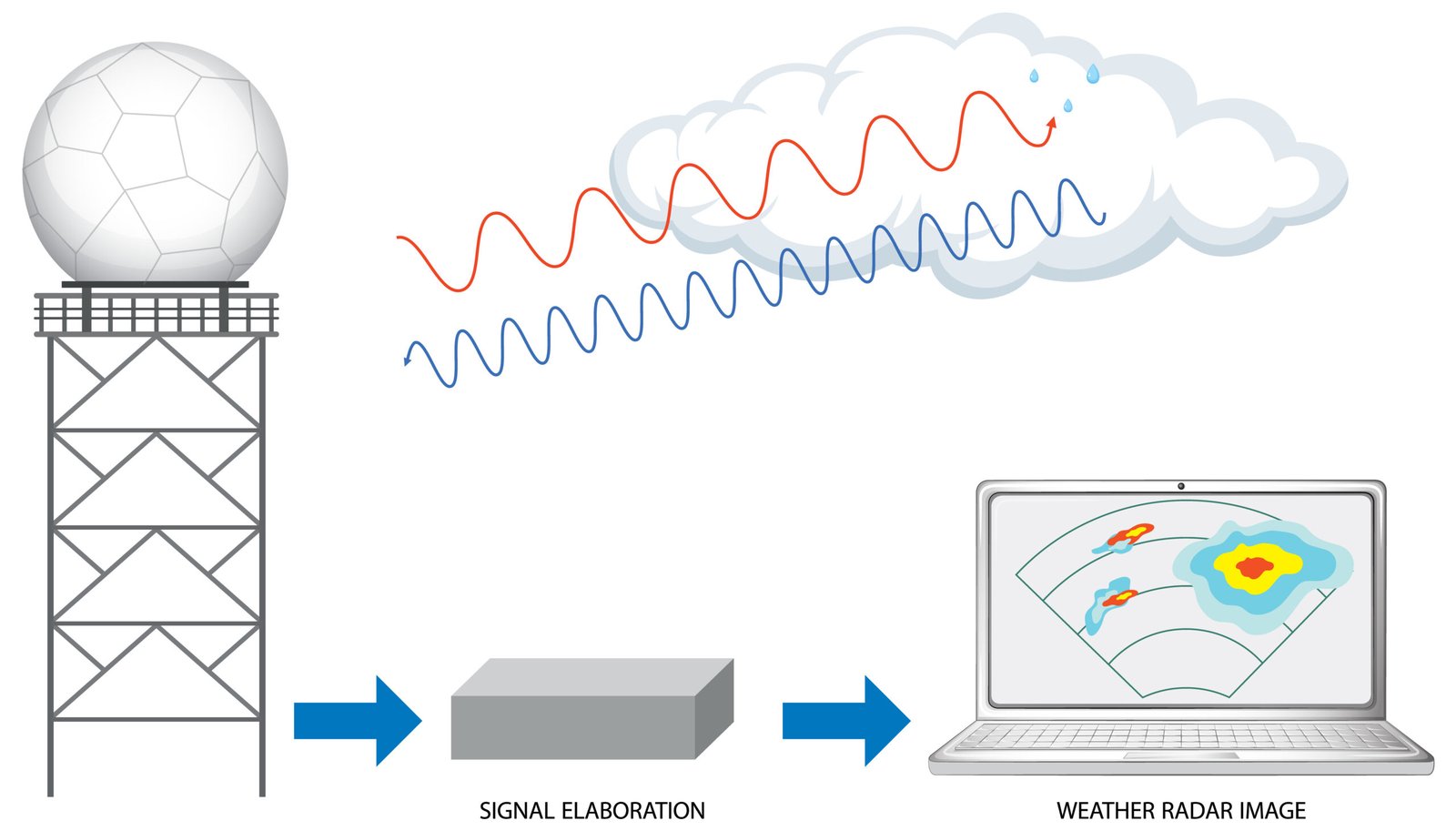
- Radar and Sonar: signal detection and interpretation
- Image and Video Processing: enhancement, compression, and features extraction
Real-World Guidelines on How to Approach Signal Processing
For your perspective on signal processing techniques:
- Understand the basics about sampling, quantization, and filtering, etc.
- There are many software tools, such as MATLAB, Python, or specialized signal processing libraries.
- Apply signal processing on real data examples to get experience with some of the useful techniques.
- Keep an eye on recent developments and techniques in this field.
Future of Signal Processing
Signal processing methods are rapidly evolving with technology.
This assimilation of innovations in machine learning and artificial intelligence is depicted along with signal processing systems, where developing smart and adaptive systems is a huge boom in places such as speech recognition, autonomous vehicles, and smart healthcare.
Signal Processing: Breaking It Down for Understanding for Students
The whole concept of signal processing can be pretty tough to lay out, but if broken down step by step then it becomes manageable to understand.
- Start with Analog and Digital Signals: Familiarize yourself with what the difference between an analog and a digital signal is.
- Learn Basic Operations: Familiarize yourself with operations such as sampling, quantization, and filtering.
- Learn Key Methods: Let’s look into methods such as the Fourier Transform and convolution.
- Apply to Real Problems: Practice applying these techniques to real-world problems.
Conclusion
The technology that brought you your smartphones, tablets, as well as Wi-Fi capabilities into your house, is based upon some pretty cool signal processing methods. It is used extensively for lots of applications, from clearer calls in telephony to imaging in the clinic.
Well, with a basic understanding of how it works and with exploration into typical applications such as Fourier Transforms, convolution, and digital filtering, you appreciate the magic.
So next time you listen to music or watch a video, remember all these interesting processes working behind the scenes. Well, keep on learning and exploring this totally interesting arena- signal processing!