
How often do you wonder how your favorite gadget gets powered up or your house gets warm? It is all about electrical machines and transformers. Let’s discover the interesting devices, learn how they work, and realize how they are connected to our lives.
What Are Electrical Machines?
Electrical machines are devices that translate electrical energy into mechanical energy, or vice versa.
These machines are very much involved in producing electricity in power plants and transmission networks but also convert electrical energy into the form of rotating motion to power motors and even your household appliances.
Types of Electrical Machines
There are two types of electrical machines:
- Generators
- Motors
Generators
Generators convert mechanical energy into electrical energy. Ride a bicycle with a dynamo light. As you pedal, the mechanical energy of your pedaling is converted into electrical energy that lights up your way.
- AC Generators (Alternators): Produce alternating current (AC).
- DC Generators: Produce direct current (DC).
Example: Power plants use massive generators to produce electricity for your home.
Motors
Motors convert electrical energy into mechanical energy. They are everywhere, from fans to electric cars.
- AC Motors: They work on alternating current.
- DC Motors: They work on direct current.
Example: Your ceiling fan is an example of an AC motor which cools you down.
What are Transformers?
Transformers are converters of AC voltage. In simple terms, they either rise or fall the voltage. Hence, if you want to send power a long distance, there’s need for efficient transmission without having to use naked wires. So, transformers are basically essential for this cause.
How Do Transformers Work?
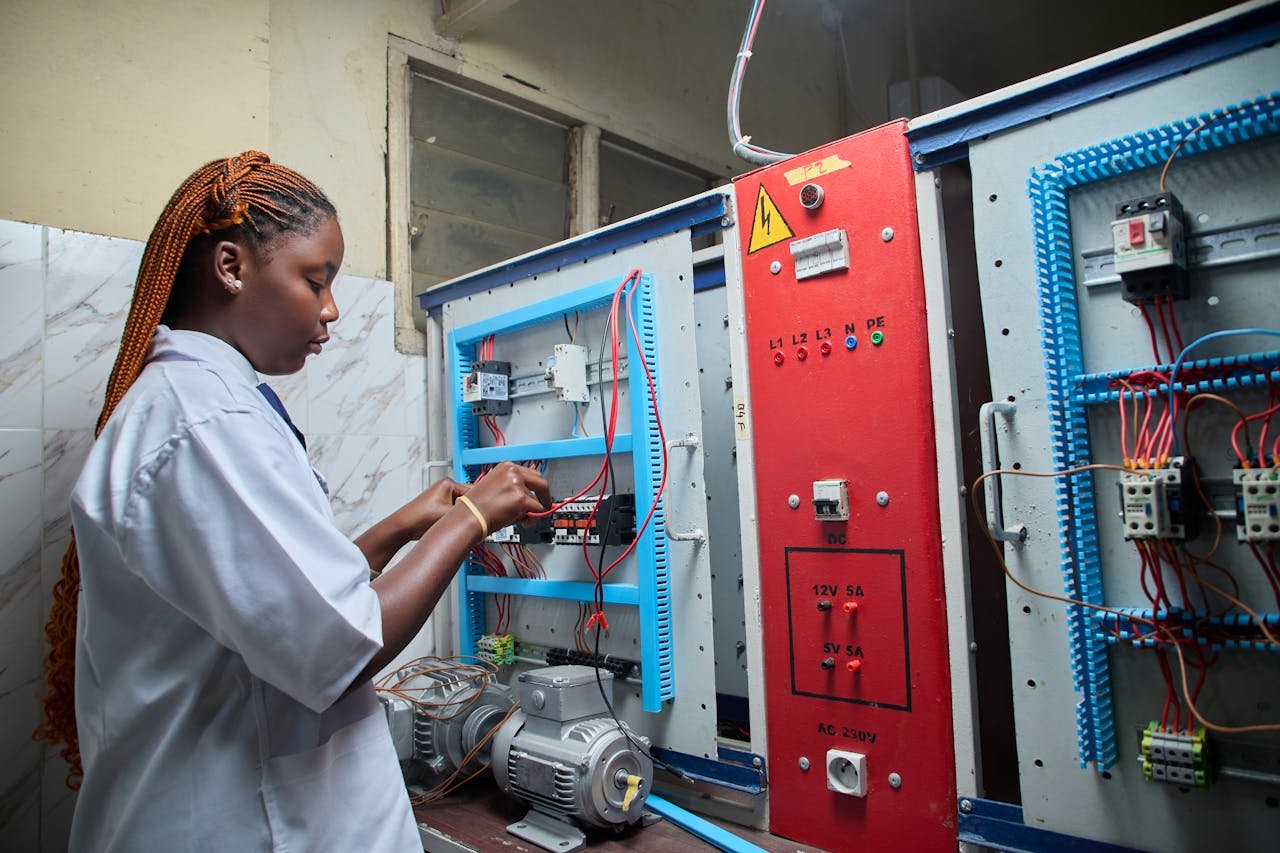
Transformers are the devices that consist of two coils of wire, known as primary coils and secondary coils, filled in a magnetic core. As the AC current flows through the primary coil, a magnetic field is generated across the secondary coil, thereby causing a voltage across its length. Turns could have either stepped up or down according to the number of turns.
For instance, high voltage in the power lines meant for long distance transmission is stepped up by transformers and then reduced to a safe level before it reaches the house for domestic utilization.
Magic of Electromagnetic Induction
Michael Faraday’s discovery of the phenomenon of electromagnetic induction has opened up ways for many appliances, electrical machines, and transformers.
This effect describes the fact that the varying magnetic field existing within a coil of wire produces an electromotive force-voltage across the ends of the coil.
Parts of Electrical Machines and Transformers
These parts have the following:
- Windings: Wires enclosed in cables carrying the current.
- Core: Composed of magnetic material, it focuses the magnetic field.
- Brushes and Commutators: Which are used in motors and generators to hold electrical contact on a rotating part.
Significance of Electrical Machines and Transformers
All these electrical machines and transformers, if not there, the comfort of life in the shape of lighting, heating, and powering electronic gadgets would not have been possible.
Applications of Electrical Machines and Transformers
Applications of electrical machines can be seen in so many fields. Some of them are as follows:
- Power Generation: The electricity is produced by the generators inside the power plants.
- Industrial Applications: Motors work through the machinery and production lines.
- Transportation: Electric trains and electric vehicles work with the help of motors.
- Household Machines: Devices such as refrigerators, washing machines and air conditioners function on motors and transformers.
Efficiency
Efficiency is another important factor of electrical machines and transformers. It deals with the ability of a machine to convert the energy given to it into an efficient output energy.
Example: If a motor has an efficiency of 90%, it indicates that 90% of electrical energy is converted to mechanical energy and the remaining 10% wasted through heat.
Practical Hints on the Employment of Electrical Machines and Transformers
While employing these machines, the following hints are held as considered:
- Safety First: Observe safety rules to shun electro-mechanical hazards.
- Regular Maintenance: Keep your machines and transformers in good condition to function properly.
- Size: Proper sizing of the machine and transformer would help to prevent inefficiency and even damage to equipment.
Future of Electrical Machines and Transformers
Advances in technology have changed electrical machines and transformers with regard to efficiency and performance. Smarter grids, renewable energy integration, and electric vehicles are some innovations that are shaping the future of electrical machines and transformers.
Conclusion
Electrical machine and transformer study gives a glimpse into an exciting yet electrifying world. Such machines form the backbone of modern technology from power generation to appliances in daily use.
You’ll learn their principles, their varieties and usages, as a means of appreciating the brilliant engineering that goes behind many of these unappreciated conveniences you consume daily-so when that next switch is flipped or you plug in that gadget, you’ll remember electricity traveling through those marvelous machines and transformers.
Now go and discover, study, and let curiosity be your guide!