

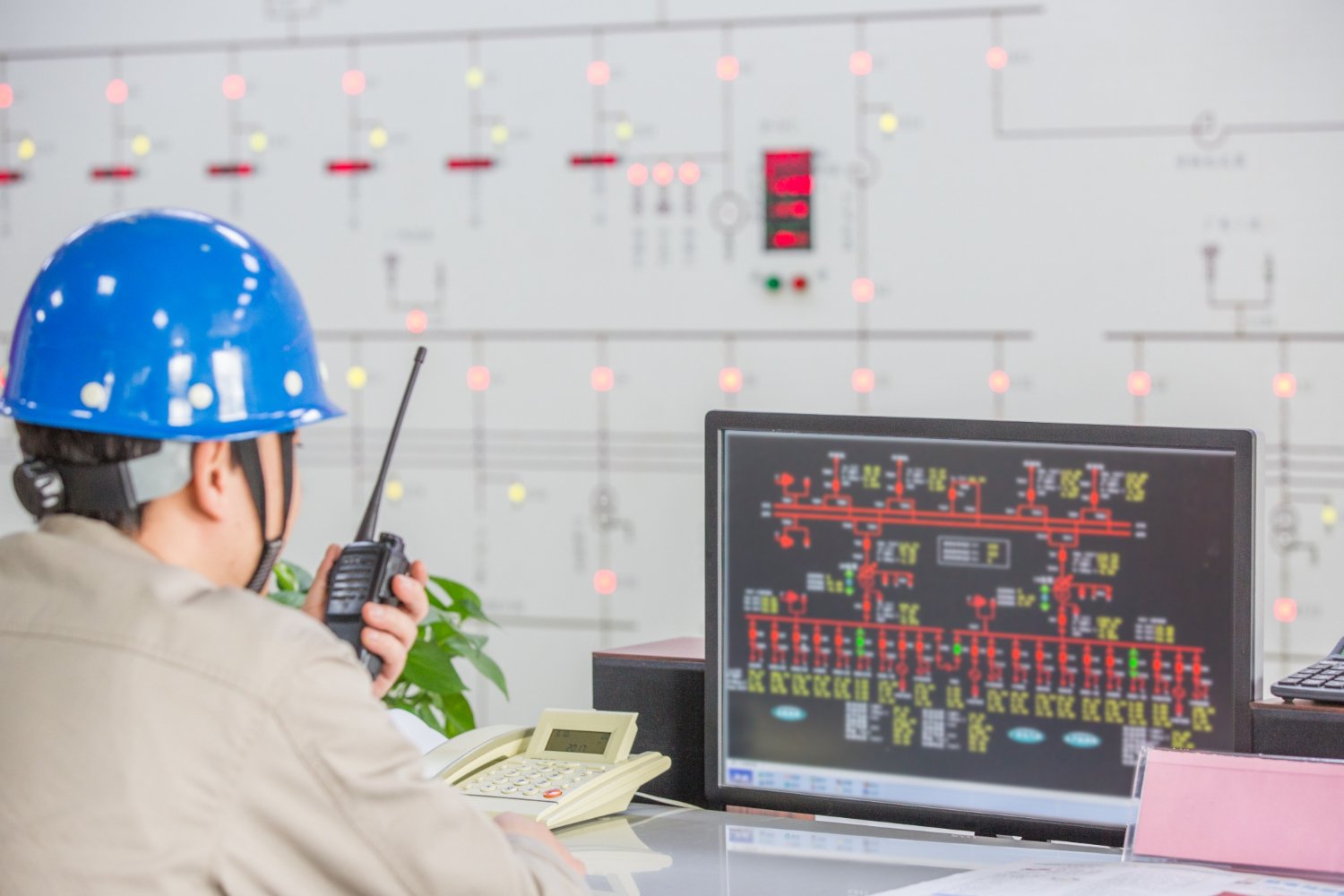
Control systems is an affair of superpower that could handle and control the behaviour of many systems. Whether it were control mechanisms for ensuring temperature within your room or precision movement of robots, control systems are around us.
Let’s start with the learning process inside control systems and learn some basic techniques.
What are Control Systems?
A control system is basically a collection of devices or software that regulate, command, direct, or in some other way control the activity of other devices or systems.
Consider a thermostat that maintains the room in your house at the perfectly comfortable temperature. It continuously measures the temperature and adjusts the output of the heater to this set point.
Types of Control Systems
Control systems can be broadly categorized into two types: open-loop and closed-loop.
Open-Loop Control Systems
In an open-loop control system, the control action does not depend on the output. Consider the example of a one-way street in which the input determines the output without any feedback.
Example: A washing machine timer. It runs for some specified time; it doesn’t care how clean the clothes are when it stops.
Advantages:
- Simple and easy to design
- Cost-effective
Disadvantages:
- No feedback to correct errors
- Less accurate
Closed-Loop Control Systems
A closed-loop control system, also known as a feedback control system, monitors its output and input to obtain a desired output; it acts like a “smart” system, improving itself while self-correcting.
Example: It alters the air conditioner’s cooling based on the temperature sensed in the room.
Advantages:
- More accurate and reliable
- Can correct disturbances and errors
Disadvantages:
- More complex and expensive
- Requires more parts
Parts of Control Systems
The following are some of the basic components of a control system:
- Sensors: Take the measurement of the current state of a system
- Controllers: Process the data from the sensors and decide what needs to be done
- Actuators: Implement the action needed to change the system according to the decision
- Feedback: Information fed back to the controller so it can make adjustments
Understand Feedback
Feedback is one of the very essential concepts in control systems. By virtue of continuous adjustments, feedback keeps the system in track by making comparisons of the actual output with the desired output.
Types of Feedback:
- Positive Feedback: It increases the value of output and gives rise to an increase.
- Negative Feedback: It reduces the value of output and stabilizes the system.
Control System Techniques
There are many techniques that can be associated with the design as well as the implementation of control systems. Let’s go through some of the most important ones:
Proportional Control (P)
In proportional control, the output of the controller is proportional to the error; that is, the difference between the desired output and the actual output.
Advantages:
- Easy to implement
- Good control stability
Disadvantages:
- May not eliminate steady-state error
Example: A cruise control system in an automobile varies the throttle position to maintain a constant speed.
Integral Control (I)
Integral control places emphasis on the sum of the past errors. It accumulates the errors over a period of time and uses that sum to change the control action.
Advantages:
- It removes steady-state error.
- It provides smooth control.
Disadvantages:
- It can make the system unstable unless it is properly tuned in one specific manner
Example: A temperature control system which controls the heater by the change of difference between the present and desired temperature
Derivative Control (D)
In derivative control, future error is computed by the variation of rate of error. By this action, it acts as a predictive control mechanism which makes a corrective adjustment to avoid future error.
Advantages:
- This improves system stability.
- It reduces overshoot
Disadvantages:
- It is noisy
- Requires careful tuning
Application: A control system of a drone flight controls the rotor speeds based on the rate of change of its position.
Proportional-Integral-Derivative Control (PID)
PID control is a combination of proportional, integral, and derivative control strategies which make an effective balance in terms of strategy control.
Benefits:
- It offers a complete control solution
- It can be applied to great width systems
Disadvantages:
- It requires three parameters to tune
- It’s relatively complex to be put into practice
Application: In an aeroplane there is an autopilot system maintaining altitude, speed and direction.
Practical Applications of Control Systems
Control systems are applicable everywhere in life. These control a large number of processes and machines. Some of these include are as follows:
- Home Automation: Thermostats, lighting systems, security systems
- Industrial Automation: Assembly lines, robotic arms, quality control.
- Transportation: Cars-cruise control, aircraft-autopilot, train speed.
- Health Care: Medical Devices: insulin pumps, heart rate monitors
Conclusion
Learning control system techniques lets you understand, on some basic understanding of open-loop and closed-loop systems and some of the key ideas of control strategies such as P, I, D, and PID control, many systems ranging from some simple domestic appliances to some more complex industrial machines.
Armed with such understanding at your fingers, begin designing your own control systems. The possibilities in building intelligent adaptive systems whose behavior responds to their environment are infinite! Come on, explore the world of control systems where your curiosity takes charge. Happy learning!