



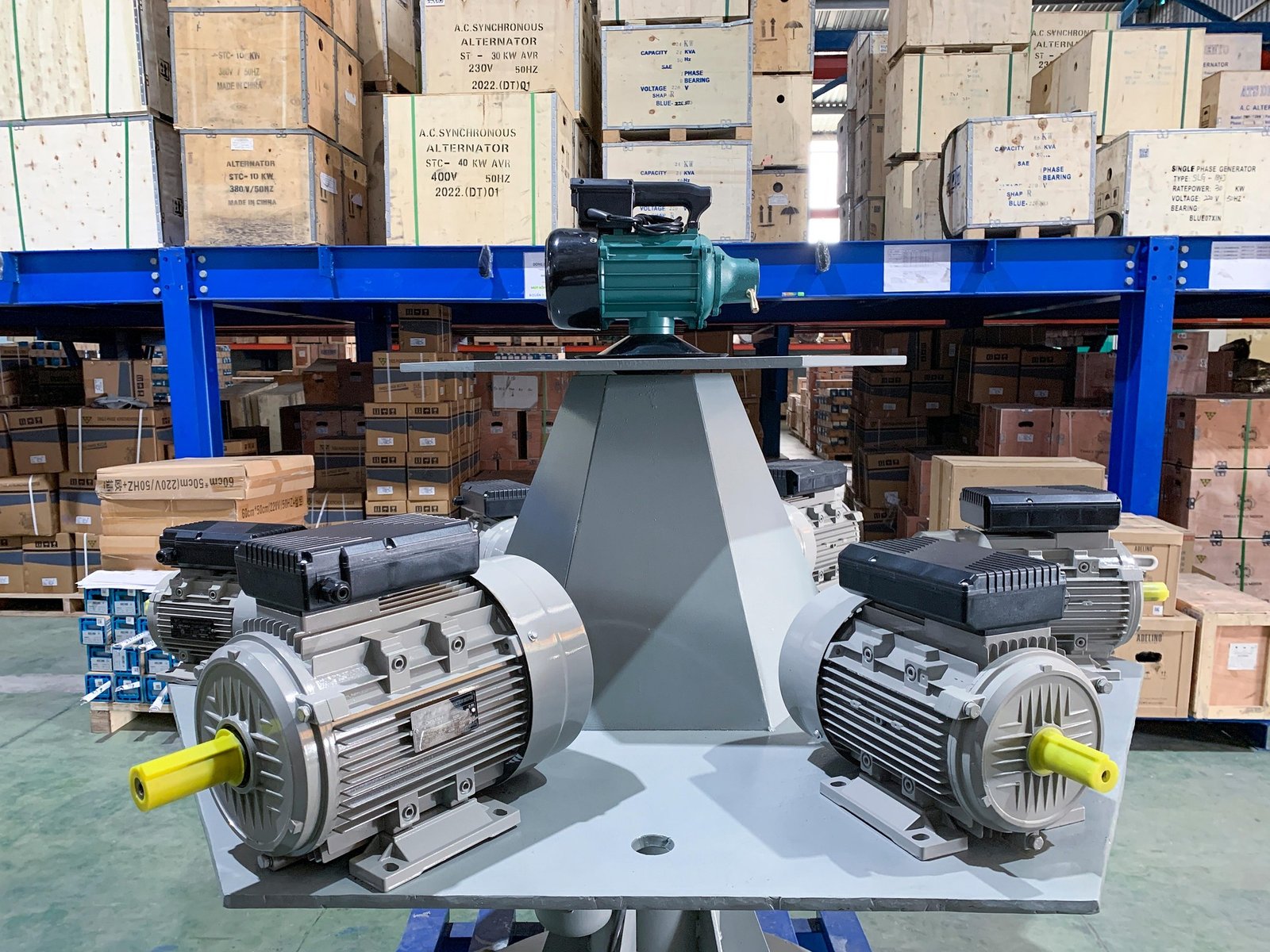
Electric motors are the workhorses of modern industry, converting electrical energy into the mechanical motion that drives countless processes. Their reliability is paramount; an unexpected motor failure can bring a production line to a standstill, leading to costly downtime that often far outweighs the repair costs themselves. However, by implementing a structured program of best practices, maintenance professionals can ensure these critical assets operate efficiently, safely, and for their maximum designed lifespan. This article outlines the essential best practices for electric motor maintenance and testing, moving from routine visual checks to advanced diagnostic techniques.
The Importance of a Proactive Maintenance Strategy
The foundation of any successful motor maintenance program is shifting from a reactive “fix-it-when-it-breaks” approach to a proactive, scheduled strategy. This is typically categorized into three levels:
· Reactive Maintenance: This approach involves running a motor until it fails and then repairing or replacing it. While seemingly simple, it is often the most expensive in the long run due to unplanned downtime, emergency repair costs, and potential collateral damage to other equipment.
· Preventive Maintenance (PM): This strategy involves performing scheduled maintenance tasks at fixed intervals, such as cleaning, lubrication, and basic testing. PM aims to reduce the likelihood of failure by addressing wear and tear before it becomes critical.
· Predictive Maintenance (PdM): This is the most advanced strategy. It uses real-time data from condition monitoring tools (vibration sensors, thermal imaging, etc.) to assess the motor’s health and predict when maintenance is required. PdM allows teams to intervene just before a failure occurs, maximizing motor availability and reducing unnecessary work.
Best Practices for a Motor Maintenance Program
- Establish a Baseline and Document Everything: A foundational best practice is creating a detailed baseline for each motor when it’s new or known to be in excellent condition. This baseline includes:
Nameplate Data: Record all details (HP/kW, Voltage, Full Load Amps, RPM, Frame, Insulation Class, Service Factor).
Test Results: Document initial results of all tests, including insulation resistance (IR), polarization index (PI), winding resistance, and vibration signatures.
Meticulous documentation is essential. By trending test results over time, you can spot gradual degradation before it becomes a critical issue. Electronic maintenance management systems (CMMS) are invaluable for tracking and analyzing this historical data.
- The Crucial First Step: Visual Inspection
Before any technical testing, a thorough visual inspection can identify many common problems. This should be a routine, scheduled activity, and sometimes even a daily check for critical machinery.
· The Exterior: Check for physical damage, corrosion, blocked cooling fins, and grease or oil leaks.
· Connections and Environment: Inspect the terminal box for moisture, loose connections, or signs of overheating. Ensure the surrounding area is clean and dry to prevent contamination.
· Cooling System: Verify that fans, fan shrouds, and air filters are unobstructed and functioning.
- Core Electrical Tests
These tests are fundamental for assessing the health of a motor’s insulation system, which is a primary cause of failure.
· Insulation Resistance (IR) Test (Megger Test): This test measures the resistance between the motor windings and the ground . It’s a critical indicator of moisture, contamination, or breakdown in the insulation. A low resistance reading (e.g., below the IEEE-recommended minimum of 5 MΩ for a motor rated below 1kV) signals a serious problem.
· Polarization Index (PI) Test: This is an extension of the IR test, comparing the resistance reading at 10 minutes to the reading at 1 minute (R10/R1). A PI ratio above 2.0 generally indicates healthy insulation, while a ratio below 1.5 suggests significant contamination or aging.
· Winding Resistance Test: This test measures the DC resistance of each phase winding using a low-resistance ohmmeter. The goal is to find an imbalance between the three phases. An imbalance of more than 2-5% indicates problems like loose connections, shorted turns, or open coils.
· Surge Comparison Test: This test applies high-voltage pulses to the windings to detect turn-to-turn insulation weaknesses that are invisible to DC tests. Mismatches in the waveform patterns between phases indicate shorts or faults.
- Mechanical and Performance Testing
Electrical tests are only part of the picture; mechanical faults are equally common. According to research, bearing wear can contribute to over 40% of motor failures.
· Vibration Analysis: This is a powerful technique for diagnosing imbalances, misalignment, bearing defects, and looseness. By measuring vibration at specific points (drive end, non-drive end) and analyzing the frequency spectrum, engineers can pinpoint the root cause of mechanical issues.
· Bearing Condition Monitoring: This can be done through ultrasonic analysis (listening for early-stage defects) or by analyzing vibration data for specific bearing fault frequencies.
· Thermal Imaging (Infrared Thermography): Using an IR camera to scan a motor under load can reveal “hot spots” that indicate poor connections, overloading, bearing friction, or cooling problems. This is a highly effective, non-contact method to identify developing issues.
- A Structured Maintenance Schedule for Switchgear: Since motors are often fed by switchgear, its maintenance is a related best practice. A proactive maintenance schedule for switchgear might include daily checks and more comprehensive inspections over time:
| Item/Equipment | Recommended Intervals | Activity |
| Daily Operator Checks | Daily | Visual inspections, check for arcing sounds, unusual smells, moisture intrusion, and ensure proper labeling and housekeeping. |
| MV & LV Circuit Breakers | Annually or 1-3 Years | Operate and inspect according to manufacturer’s instructions. |
| Moulded Case Circuit Breakers | 3-5 Years | Conduct routine trip testing. |
Conclusion:
A world-class motor maintenance program is built on a foundation of proactive practices, blending essential visual inspections with a comprehensive suite of electrical and mechanical tests. By establishing baselines, meticulously documenting results, and trending data over time, maintenance teams can transition from reactive firefighting to predictive, data-driven decision-making. This approach maximizes motor availability, extends equipment lifespan, optimizes energy use, and significantly reduces the risk of costly and disruptive failures. Investing in these best practices is not an expense but a strategic investment in the reliability and profitability of any operation.